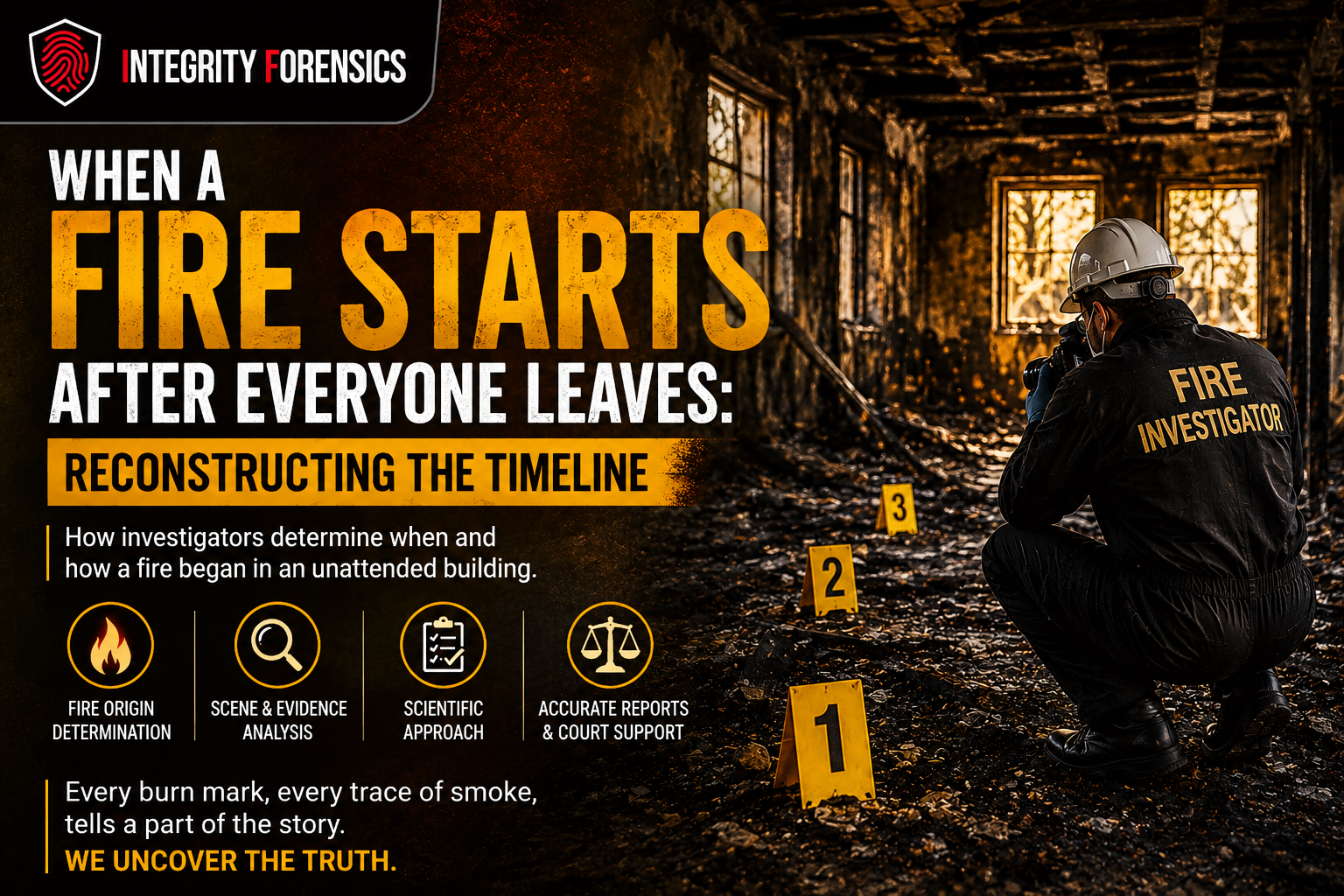
When a Fire Starts After Everyone Leaves: Reconstructing the Timeline
Introduction
Few situations are as perplexing as a fire that breaks out in a building long after the last person has left. With no eyewitnesses present and much of the scene potentially damaged by flames, determining exactly when and how the fire started can be a challenging task. Yet, establishing a timeline is often critical for identifying the cause of the fire, assessing liability, detecting possible criminal activity, and supporting insurance or legal proceedings.
This is where forensic fire investigation plays a vital role. Through scientific analysis, evidence collection, and scene reconstruction, investigators can piece together the sequence of events leading up to and during the fire. Even in the absence of direct witnesses, a fire scene can reveal a wealth of information.
Why Establishing a Timeline Matters
Reconstructing the timeline of a fire helps investigators answer several crucial questions:
- When did the fire likely begin?
- Where did the fire originate?
- How quickly did it spread?
- Was the fire accidental or intentionally set?
- Were there any suspicious activities before the incident?
The answers to these questions can significantly impact criminal investigations, insurance claims, civil litigation, and safety assessments.
The First Step: Securing and Examining the Scene
Once emergency responders have extinguished the fire and the area is declared safe, fire investigators begin their examination. The scene is carefully documented through photographs, videos, sketches, and notes before any evidence is disturbed.
Investigators pay close attention to:
- Burn patterns
- Smoke deposits
- Structural damage
- Electrical systems
- Appliances and equipment
- Potential ignition sources
Every detail contributes to understanding how the fire developed over time.
Identifying the Point of Origin
One of the most important aspects of timeline reconstruction is determining the fire’s point of origin.
Investigators look for indicators such as:
- Areas with the deepest char damage
- V-shaped burn patterns on walls
- Low-burning areas
- Heat and smoke movement patterns
- Melting and deformation of materials
By tracing the fire’s movement backward, investigators can identify the area where combustion most likely began.
Using Fire Patterns to Track Fire Progression
As a fire spreads, it leaves behind characteristic patterns. These patterns act like a roadmap, allowing investigators to understand the fire’s growth and direction.
Common indicators include:
Char Depth Analysis
Materials exposed to heat for longer periods generally exhibit deeper charring. Comparing char depth across different areas can help estimate the fire’s progression.
Smoke and Soot Distribution
The movement of smoke and soot can reveal airflow patterns and indicate which areas were affected first.
Glass and Material Damage
The condition of windows, metals, plastics, and building materials often reflects the intensity and duration of heat exposure.
Examining Electrical and Mechanical Evidence
Many unattended building fires are initially suspected to be electrical in nature. Investigators closely inspect:
- Circuit breakers
- Electrical wiring
- Power outlets
- Appliances
- HVAC systems
By examining arc marks, electrical faults, and thermal damage, experts can determine whether an electrical malfunction occurred before the fire or resulted from it.
This distinction is critical because fire damage itself can create electrical effects that might otherwise be mistaken for the cause.
Digital Evidence: The Modern Timeline Witness
Today’s buildings often contain valuable sources of digital evidence.
Investigators may analyze:
- CCTV footage
- Access control systems
- Alarm logs
- Smart home devices
- Security sensors
- Building management systems
For example, a security camera may reveal the last activity before the fire, while alarm records can provide an exact timestamp of smoke detection or system failure.
These digital records often serve as independent witnesses, helping investigators establish a precise timeline.
Witness Statements Still Matter
Although no one may have witnessed the fire itself, surrounding individuals can provide valuable information.
Investigators may interview:
- Neighbours
- Security personnel
- Maintenance staff
- Nearby business owners
- Emergency responders
Information regarding unusual sounds, smells, power fluctuations, suspicious individuals, or smoke sightings can help narrow the estimated ignition time.
Determining Whether the Fire Was Accidental or Deliberate
Once the timeline has been reconstructed, investigators assess whether the evidence points toward an accidental fire or intentional ignition.
Potential indicators of arson may include:
- Multiple points of origin
- Presence of accelerants
- Evidence of forced entry
- Tampering with security systems
- Financial or personal motives
In contrast, accidental fires often show clear evidence of equipment failure, electrical faults, or human error.
Challenges in Reconstructing Fire Timelines
Fire investigations are rarely straightforward. Investigators frequently face challenges such as:
- Extensive destruction of evidence
- Water damage from firefighting efforts
- Structural collapse
- Contaminated scenes
- Delayed reporting
Despite these obstacles, modern forensic techniques and scientific methodologies allow investigators to reconstruct events with remarkable accuracy.
The Role of Forensic Experts
Fire investigation requires a multidisciplinary approach involving fire science, engineering, chemistry, digital forensics, and evidence analysis.
Professional forensic experts help:
- Determine fire origin and cause
- Analyze fire debris
- Examine electrical evidence
- Reconstruct fire progression
- Prepare expert reports
- Provide expert testimony in legal proceedings
Their findings can play a decisive role in criminal cases, insurance disputes, and civil litigation.
Conclusion
A fire that begins after everyone has left a building may seem impossible to explain, but every fire leaves behind a story. Through careful examination of burn patterns, physical evidence, electrical systems, digital records, and witness accounts, forensic investigators can reconstruct the timeline of events with remarkable precision.
Understanding when and how a fire started is often the key to uncovering the truth—whether it involves an accident, negligence, insurance fraud, or intentional arson. In the field of forensic fire investigation, even a silent, unattended building can provide the evidence needed to reveal what really happened.

