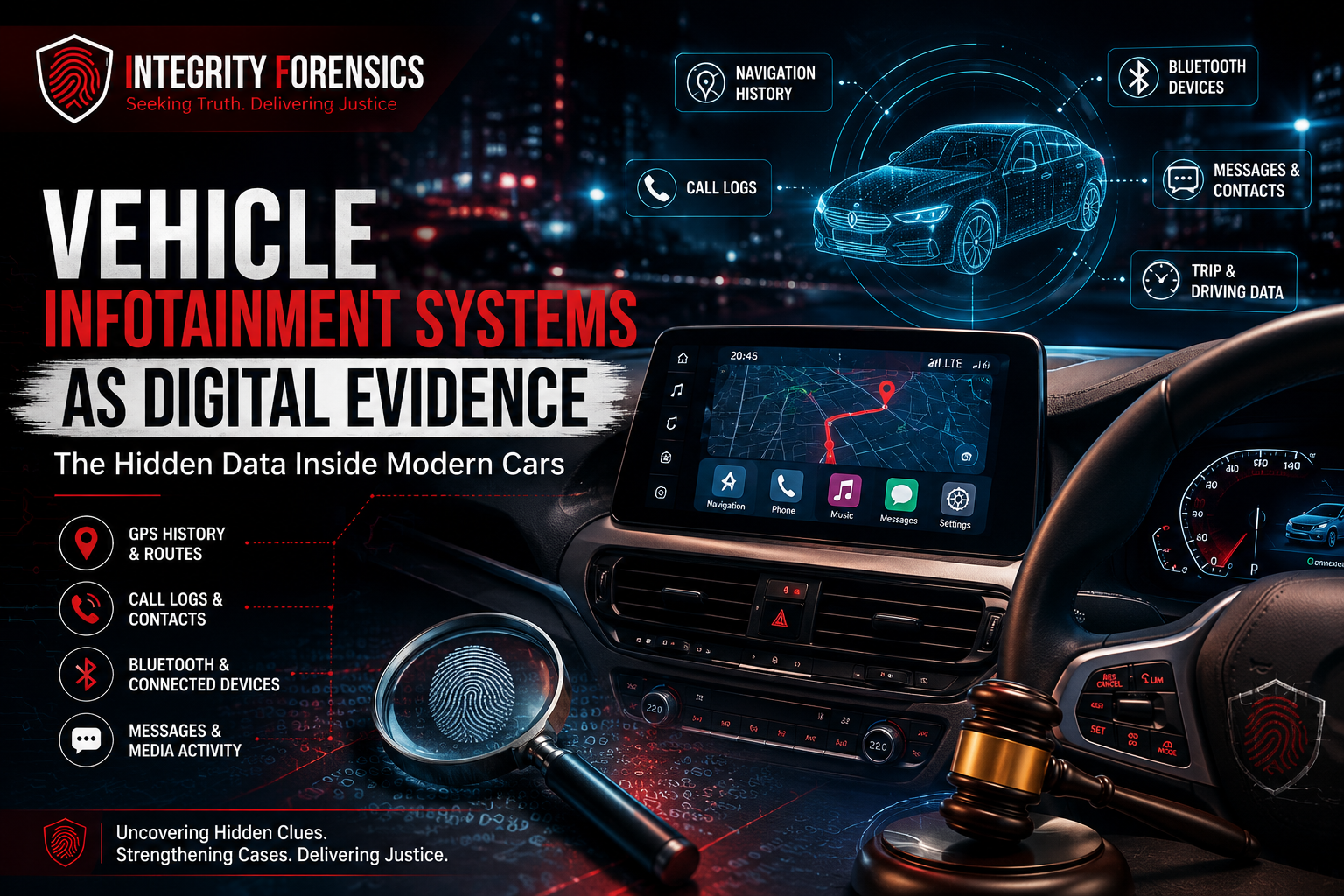
Vehicle Infotainment Systems as Digital Evidence: The Hidden Data Inside Modern Cars
Introduction
Modern vehicles are no longer just modes of transportation. Today’s cars function as sophisticated computers on wheels, equipped with advanced infotainment systems that store and process vast amounts of digital information. From navigation history and call logs to Bluetooth connections and location data, these systems can contain valuable evidence that may assist investigators in criminal, civil, and corporate investigations.
As vehicles become increasingly connected, forensic experts are discovering that infotainment systems can provide critical insights into a person’s activities, movements, and interactions. This emerging field, known as vehicle forensics, is becoming an important component of digital investigations.
What Is a Vehicle Infotainment System?
A vehicle infotainment system is the integrated platform that provides entertainment, communication, navigation, and connectivity features within a vehicle. Popular systems include:
- Apple CarPlay
- Android Auto
- Manufacturer-specific systems such as BMW iDrive, Mercedes MBUX, and Ford SYNC
- Built-in GPS navigation systems
- Voice assistant integrations
These systems are designed to enhance the driving experience but often retain significant amounts of user data.
What Type of Data Can Be Stored?
Vehicle infotainment systems may store a surprising amount of information, including:
GPS and Navigation Data
- Frequently visited locations
- Destination history
- Recent routes
- Home and work addresses
- Saved locations
Communication Records
- Call logs
- Contact lists
- Paired smartphone information
- Text message metadata in some systems
Device Connectivity Data
- Bluetooth pairing history
- Connected devices
- Wi-Fi network information
- Media synchronization records
Vehicle Usage Information
- Trip history
- Driving patterns
- Vehicle diagnostics
- System activity logs
This information can provide investigators with a detailed timeline of vehicle usage and user activity.
How Vehicle Data Can Support Investigations
Criminal Investigations
Vehicle infotainment data may help establish:
- A suspect’s location at a particular time
- Travel routes before or after an incident
- Connections between individuals
- Presence near a crime scene
Civil Litigation
In civil cases, vehicle data can assist in:
- Accident investigations
- Insurance disputes
- Workplace investigations
- Verification of travel claims
Missing Person Cases
Location history and recent destinations may provide valuable leads regarding a missing person’s movements and last known whereabouts.
Real-World Investigative Value
Imagine a scenario where a suspect denies being near a specific location. GPS records stored within the vehicle’s infotainment system may reveal recent routes, saved destinations, or navigation searches that place the vehicle near the area in question.
Similarly, Bluetooth pairing records can demonstrate whether a specific mobile device was connected to the vehicle during a relevant timeframe, potentially linking an individual to the vehicle.
When combined with mobile device forensics, CCTV analysis, and other forms of digital evidence, infotainment data can help build a more complete investigative picture.
Challenges in Vehicle Forensics
Although vehicle infotainment systems can contain valuable evidence, extracting and analyzing this information is not always straightforward.
Investigators may face challenges such as:
- Proprietary vehicle software
- Encryption mechanisms
- Differences between manufacturers
- Limited access to stored data
- Risk of data alteration during examination
Proper forensic procedures are essential to ensure that evidence is collected, preserved, and analyzed in a manner that maintains its integrity and admissibility.
Importance of Maintaining Evidence Integrity
As with all forms of digital evidence, maintaining a proper chain of custody is critical when handling vehicle data. Investigators must document every stage of the examination process to ensure that findings remain reliable and legally defensible.
Using validated forensic tools and established methodologies helps ensure that the evidence can withstand scrutiny during legal proceedings.
The Future of Vehicle Forensics
With the rapid growth of connected vehicles, autonomous driving technologies, and cloud-based vehicle services, the amount of data generated by vehicles will continue to increase.
Future investigations may involve:
- Cloud-synchronized vehicle data
- Connected vehicle ecosystems
- Advanced telematics records
- Vehicle-to-vehicle communication logs
- Autonomous vehicle event records
As technology evolves, vehicle infotainment systems will become an even more significant source of digital evidence.
Conclusion
Vehicle infotainment systems have emerged as a valuable source of digital evidence in modern investigations. From GPS routes and call logs to Bluetooth connections and trip histories, these systems can provide critical insights that help investigators establish timelines, verify movements, and uncover important connections.
As vehicles become increasingly connected, vehicle forensics will continue to play a growing role in criminal investigations, civil disputes, insurance claims, and corporate inquiries. Understanding and properly analyzing this data can be the key to uncovering the truth hidden within today’s smart vehicles.

