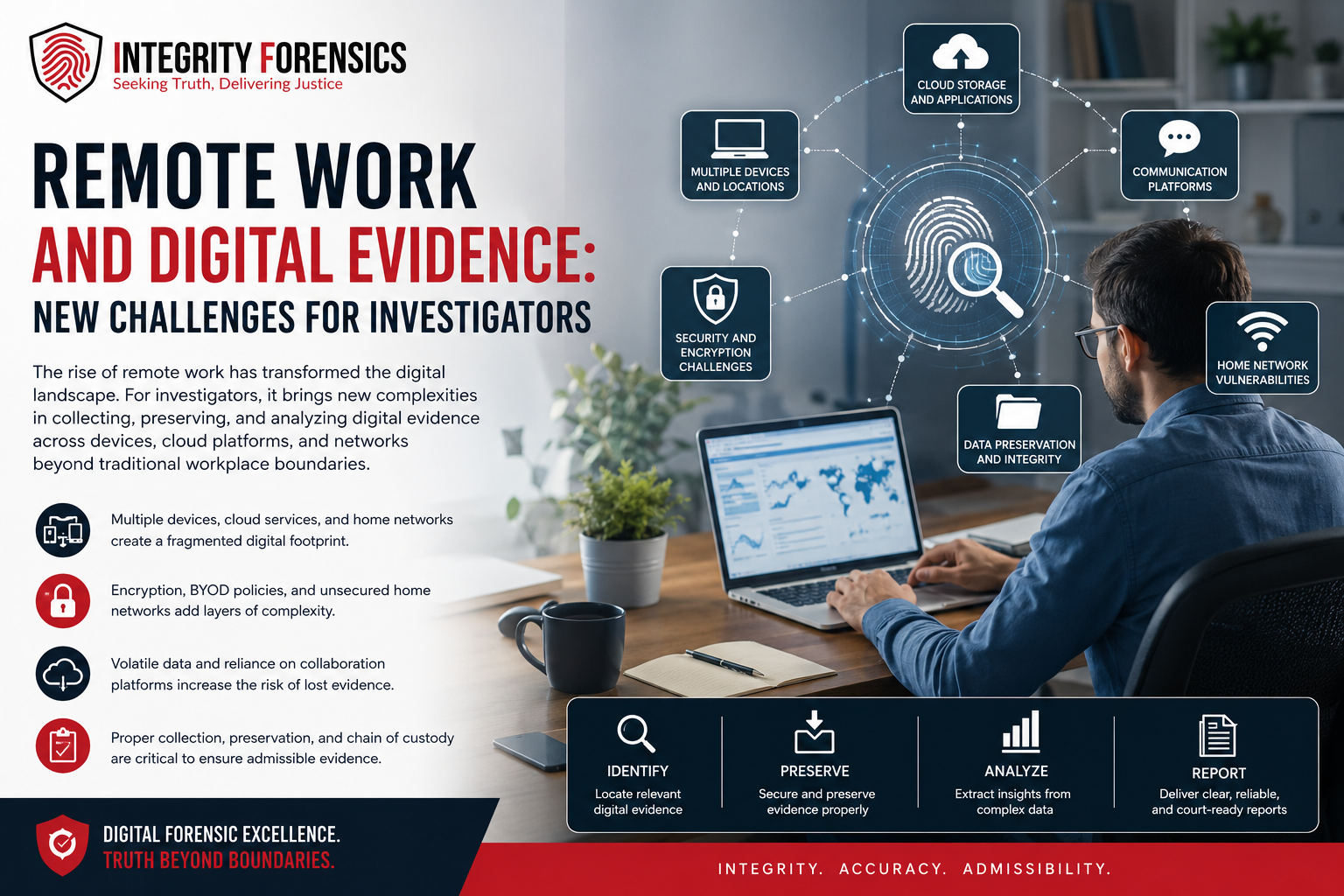
Remote Work and Digital Evidence: New Challenges for Investigators
Introduction
The rapid adoption of remote and hybrid work environments has fundamentally changed the way organizations operate. Employees now access corporate systems from homes, coworking spaces, and even while traveling, using a combination of company-issued and personal devices. While this flexibility has improved productivity and employee satisfaction, it has also introduced new complexities in digital investigations.
From data breaches and insider threats to intellectual property theft and workplace misconduct, incidents occurring in remote work environments leave behind digital evidence that is often scattered across multiple devices, cloud platforms, and communication tools. For forensic investigators, collecting, preserving, and analyzing this evidence requires new techniques and a deeper understanding of modern digital ecosystems.
This article explores the challenges remote work presents for digital forensic investigations and the strategies organizations can adopt to ensure digital evidence remains reliable and legally admissible.
How Remote Work Has Changed Digital Evidence
Traditional workplace investigations typically involved examining computers located within an organization’s office network. Today, employees may work using laptops, smartphones, tablets, cloud storage platforms, collaboration software, and home Wi-Fi networks.
As a result, digital evidence may now exist across:
- Company laptops and desktops
- Personal devices used for work (BYOD)
- Cloud storage services
- Email platforms
- Video conferencing applications
- Instant messaging platforms
- VPN logs
- Mobile devices
- Home network equipment
- External storage devices
Investigators must often gather evidence from multiple sources before establishing a complete timeline of events.
Key Challenges in Remote Work Investigations
1. Multiple Devices and Locations
Remote employees frequently switch between several devices throughout the day. A single investigation may require examining:
- Office laptops
- Personal smartphones
- Tablets
- External hard drives
- USB storage devices
Because these devices are located outside the organization’s premises, securing them quickly becomes more difficult.
2. Increased Use of Cloud Services
Modern workplaces rely heavily on cloud-based platforms for file sharing and collaboration.
Examples include:
- Microsoft 365
- Google Workspace
- Dropbox
- OneDrive
Documents may never be stored locally, making cloud logs, version histories, and access records essential sources of digital evidence.
3. Bring Your Own Device (BYOD) Policies
Many organizations allow employees to use personal devices for work. While convenient, this creates legal and forensic challenges.
Investigators must carefully distinguish between:
- Personal information
- Corporate data
- Privileged communications
- Sensitive personal files
Maintaining employee privacy while collecting business-related evidence is a delicate balance.
4. Volatile Digital Evidence
Digital evidence can disappear quickly.
Examples include:
- Deleted chat messages
- Temporary application logs
- Unsaved documents
- Browser session data
- Cached files
Prompt forensic preservation is essential to prevent permanent loss of evidence.
5. Home Networks Are Outside Corporate Control
Unlike office networks, home internet connections are not monitored by corporate IT teams.
Potential issues include:
- Weak Wi-Fi passwords
- Shared family computers
- Unsecured routers
- Unauthorized device access
These factors complicate attribution and increase the likelihood of evidence contamination.
6. Encrypted Communication Platforms
Remote work relies heavily on encrypted communication tools such as:
- Microsoft Teams
- Slack
- Zoom
Although encryption improves security, investigators may face challenges accessing conversation histories, metadata, and deleted communications.
Common Incidents Requiring Remote Digital Investigations
Remote work investigations frequently involve:
- Insider data theft
- Intellectual property theft
- Employee misconduct
- Unauthorized file transfers
- Ransomware attacks
- Phishing incidents
- Business Email Compromise (BEC)
- Account compromise
- Unauthorized cloud access
- Compliance violations
Each of these incidents requires careful collection and preservation of digital evidence.
Sources of Digital Evidence in Remote Work Environments
Investigators may examine evidence from multiple locations, including:
Device Evidence
- Hard drives
- SSDs
- Mobile phones
- USB devices
- System logs
Cloud Evidence
- Cloud storage logs
- Document version history
- File sharing records
- User activity logs
Network Evidence
- VPN logs
- Firewall logs
- Authentication records
- Remote access logs
Communication Evidence
- Emails
- Video meeting records
- Chat conversations
- Shared documents
- Calendar invitations
Combining these evidence sources helps investigators reconstruct user activity accurately.
Maintaining the Integrity of Digital Evidence
Digital evidence is valuable only if its integrity can be proven.
Investigators follow strict forensic procedures, including:
- Creating forensic images instead of examining original devices
- Using cryptographic hash values to verify evidence integrity
- Maintaining detailed chain of custody records
- Documenting every investigative step
- Preventing unauthorized access to evidence
These practices help ensure that digital evidence remains admissible in legal proceedings.
Best Practices for Organizations
Organizations can strengthen their ability to investigate remote incidents by adopting proactive measures.
These include:
Establish Clear Remote Work Policies
Employees should understand acceptable device usage, data handling, and reporting procedures.
Deploy Endpoint Monitoring
Endpoint Detection and Response (EDR) solutions help detect suspicious activity across remote devices.
Enable Centralized Logging
Collecting logs from endpoints, VPNs, cloud services, and authentication systems simplifies future investigations.
Use Multi-Factor Authentication (MFA)
MFA significantly reduces the risk of unauthorized account access.
Regularly Back Up Data
Secure backups ensure that important evidence is not permanently lost after ransomware attacks or accidental deletion.
Train Employees
Cybersecurity awareness training reduces the likelihood of phishing attacks, credential theft, and accidental data exposure.
The Role of Digital Forensic Experts
Digital forensic professionals play a crucial role in remote workplace investigations by:
- Identifying relevant digital evidence
- Recovering deleted files
- Analyzing cloud activity
- Reconstructing user timelines
- Tracing unauthorized access
- Preserving evidence using forensically sound methods
- Preparing expert reports for legal proceedings
- Supporting organizations during internal investigations and litigation
Their expertise ensures investigations remain objective, technically accurate, and legally defensible.
Future Trends in Remote Digital Investigations
As remote work continues to evolve, digital investigations will increasingly involve:
- Artificial Intelligence-assisted forensic analysis
- Cloud-native forensic tools
- Zero Trust security environments
- Internet of Things (IoT) device investigations
- Enhanced automation for log correlation
- Advanced forensic analysis of collaboration platforms
Organizations that invest in modern forensic capabilities will be better prepared to respond to emerging cyber threats.
Conclusion
Remote work has transformed the modern workplace, bringing greater flexibility but also introducing significant challenges for digital investigations. Evidence is now distributed across personal devices, cloud platforms, communication tools, and home networks, making forensic investigations more complex than ever before.
By implementing robust security policies, preserving digital evidence correctly, and engaging qualified forensic experts, organizations can effectively investigate incidents while maintaining the integrity and admissibility of evidence. As remote work becomes a permanent part of business operations, digital forensic readiness will remain an essential component of organizational resilience and legal compliance.

