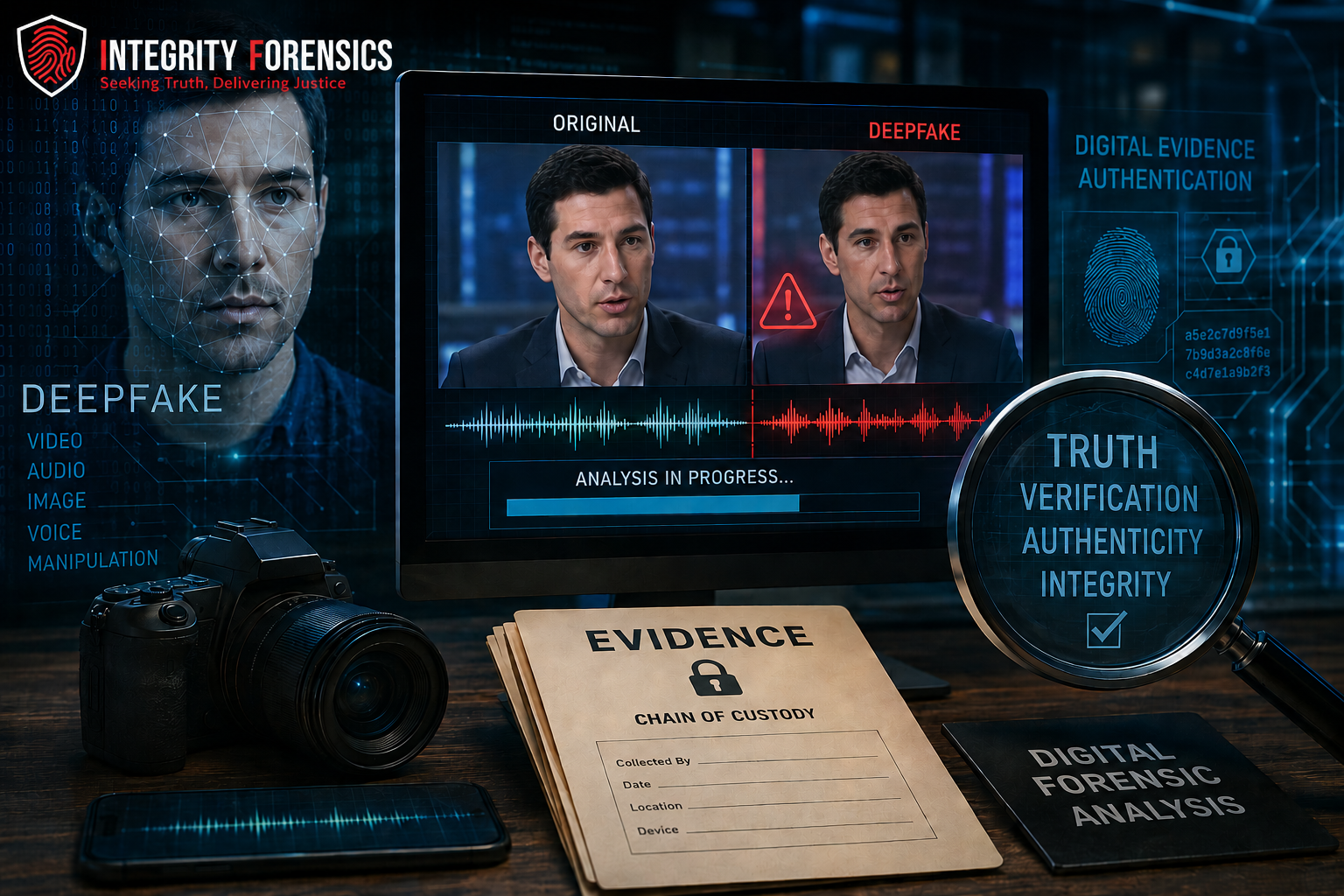
Deepfakes and Digital Evidence: The New Challenge for Forensic Experts
Introduction
The digital age has transformed the way evidence is collected, analyzed, and presented in legal proceedings. From surveillance footage and social media posts to smartphone recordings and digital communications, electronic evidence has become a cornerstone of modern investigations. However, with technological advancements comes a new and growing threat: deepfakes.
Deepfakes are highly realistic audio, video, and image manipulations created using artificial intelligence (AI) and machine learning technologies. These fabricated media files can convincingly depict individuals saying or doing things they never actually said or did. As deepfake technology becomes increasingly sophisticated and accessible, it presents significant challenges for forensic experts, law enforcement agencies, legal professionals, and organizations that rely on digital evidence.
In this article, we explore how deepfakes are reshaping the digital evidence landscape, the risks they pose, and the critical role forensic experts play in detecting and authenticating digital content.
What Are Deepfakes?
Deepfakes are synthetic media generated using deep learning algorithms, particularly Generative Adversarial Networks (GANs). These AI models analyze vast amounts of data, such as photographs, videos, and voice recordings, to create highly convincing replicas of a person’s appearance, voice, or behavior.
Initially developed for research and entertainment purposes, deepfake technology has evolved rapidly. Today, even individuals with limited technical expertise can access tools capable of producing realistic manipulated content.
Deepfakes can take various forms:
- Manipulated videos
- AI-generated voice recordings
- Altered photographs
- Synthetic identities
- Fabricated social media content
The realism of these creations makes distinguishing authentic content from manipulated media increasingly difficult.
Why Deepfakes Are a Growing Concern
The widespread availability of deepfake technology has introduced serious concerns across multiple sectors.
Threats to Legal Investigations
Digital evidence often plays a decisive role in criminal and civil cases. Video recordings, audio clips, and digital communications can establish timelines, verify alibis, or identify suspects. Deepfakes undermine trust in such evidence by introducing the possibility of deliberate manipulation.
A fabricated video could falsely implicate an individual in criminal activity, while a manipulated audio recording could distort witness testimony or business communications.
Corporate and Financial Risks
Organizations face increasing risks from deepfake-enabled fraud. Criminals have already used AI-generated voice cloning to impersonate executives and authorize fraudulent financial transactions. Deepfake videos can also be used to spread misinformation, manipulate stock prices, or damage corporate reputations.
Political and Social Implications
Deepfakes have the potential to influence public opinion, disrupt elections, and spread misinformation on a massive scale. False videos or statements attributed to public figures can rapidly circulate online before verification efforts catch up.
The Impact on Digital Evidence
Traditionally, digital evidence was often considered more reliable than eyewitness accounts due to its perceived objectivity. Deepfakes challenge this assumption.
Erosion of Trust
The existence of sophisticated manipulation tools creates doubt around genuine evidence. Even authentic recordings may face scrutiny if opposing parties claim they could have been altered.
Increased Verification Requirements
Courts, investigators, and organizations now require more rigorous authentication procedures to establish the integrity of digital evidence.
Challenges in Chain of Custody
Maintaining a documented chain of custody has always been essential in forensic investigations. With deepfakes, experts must also demonstrate that digital files have not been manipulated during creation, transmission, storage, or presentation.
How Forensic Experts Detect Deepfakes
As deepfake technology advances, forensic experts are developing increasingly sophisticated methods to identify manipulated content.
Metadata Analysis
Digital files contain metadata that provides valuable information about creation dates, editing history, device details, and software used. Inconsistencies within metadata can indicate potential manipulation.
Image and Video Forensics
Experts analyze visual artifacts that may reveal AI-generated content, including:
- Irregular facial movements
- Inconsistent lighting and shadows
- Unnatural blinking patterns
- Distorted reflections
- Pixel-level anomalies
Advanced forensic software can identify subtle signs that are invisible to the human eye.
Audio Forensics
Deepfake audio detection involves examining:
- Voice frequency patterns
- Background noise inconsistencies
- Speech cadence abnormalities
- Compression artifacts
These indicators can help determine whether a recording has been synthesized or altered.
AI-Powered Detection Tools
Ironically, artificial intelligence is also becoming one of the most effective tools for combating deepfakes. Machine learning models can analyze large volumes of media and detect patterns associated with synthetic content.
Continuous improvements in AI-based detection systems are helping forensic professionals stay ahead of emerging threats.
The Importance of Digital Evidence Authentication
In today’s environment, authentication has become more important than ever.
Forensic experts must verify:
- Source authenticity
- File integrity
- Chain of custody
- Device attribution
- Absence of unauthorized modifications
Organizations and legal teams increasingly rely on digital forensic specialists to ensure evidence remains admissible, reliable, and defensible in court.
Comprehensive forensic analysis can often mean the difference between accepting manipulated content and uncovering the truth.
Best Practices for Organizations
To reduce the risks associated with deepfakes, organizations should adopt proactive measures.
Implement Evidence Preservation Protocols
Digital evidence should be securely collected, stored, and documented from the moment it is acquired.
Conduct Regular Verification
Important digital communications, recordings, and media should undergo authentication checks when used in legal, regulatory, or investigative matters.
Train Employees
Employees should be educated about deepfake risks, social engineering tactics, and methods for verifying suspicious communications.
Partner with Forensic Experts
Working with experienced digital forensic professionals can help organizations detect manipulation early and respond effectively to potential threats.
The Future of Deepfakes and Digital Forensics
The battle between deepfake creation and detection technologies will continue to evolve. As AI-generated content becomes increasingly realistic, forensic methodologies must adapt accordingly.
Future developments are likely to include:
- Advanced AI detection systems
- Blockchain-based evidence verification
- Digital watermarking technologies
- Enhanced authentication standards
- International regulatory frameworks
Forensic experts will remain at the forefront of this effort, ensuring the integrity of digital evidence in an increasingly complex digital world.
Conclusion
Deepfakes represent one of the most significant challenges facing digital forensics today. Their ability to create convincing but entirely fabricated audio, video, and image content threatens the reliability of digital evidence across legal, corporate, and public domains.
As trust in digital media becomes more fragile, the role of forensic experts has never been more critical. Through advanced forensic analysis, evidence authentication, and emerging detection technologies, digital forensic professionals help safeguard the truth and preserve the integrity of investigations.
For organizations, legal teams, and investigators, recognizing the risks posed by deepfakes and investing in robust forensic verification processes is no longer optional—it is essential. In an era where seeing is no longer believing, trusted digital forensic expertise remains the key to uncovering authentic evidence and ensuring justice prevails.

