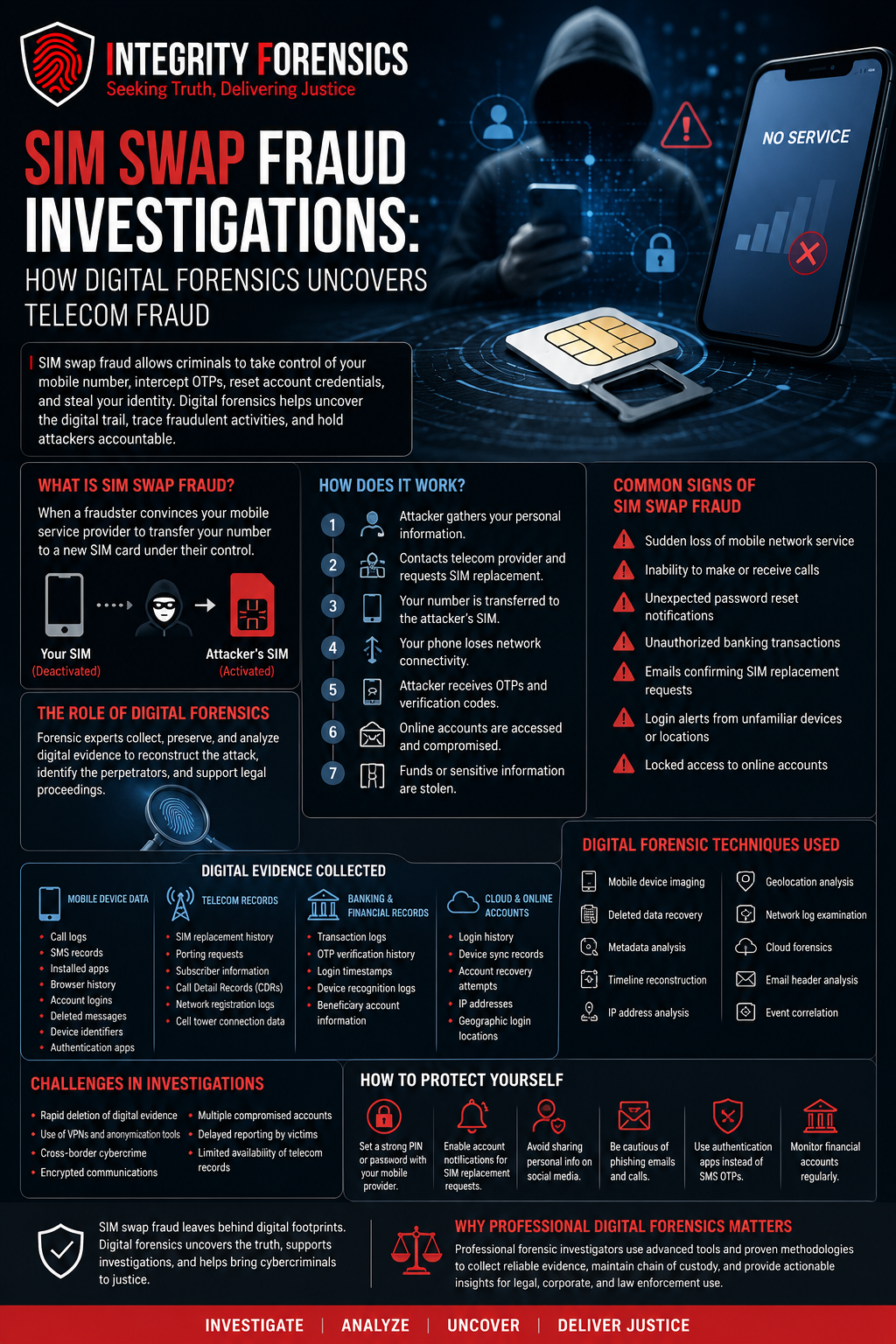
SIM Swap Fraud Investigations: How Digital Forensics Uncovers Telecom Fraud
Introduction
With the rapid growth of online banking, digital wallets, and mobile-based authentication, cybercriminals have found new ways to exploit users through SIM swap fraud. This increasingly common form of identity theft enables attackers to gain control of a victim’s mobile number, allowing them to intercept one-time passwords (OTPs), reset account credentials, and access sensitive financial and personal information.
SIM swap fraud can result in significant financial losses, unauthorized transactions, and compromised digital identities. Fortunately, digital forensic experts play a critical role in investigating these incidents by uncovering digital evidence, tracing fraudulent activities, and helping law enforcement and legal professionals identify those responsible.
What is SIM Swap Fraud?
SIM swap fraud, also known as SIM hijacking or SIM porting fraud, occurs when a fraudster convinces a mobile service provider to transfer a victim’s phone number to a new SIM card under the criminal’s control.
Once the transfer is complete, the victim loses access to their mobile network while the attacker begins receiving calls, text messages, and authentication codes intended for the victim. This allows criminals to bypass two-factor authentication (2FA) and gain unauthorized access to online accounts.
How Does SIM Swap Fraud Work?
A typical SIM swap attack follows these steps:
- The attacker gathers personal information about the victim through phishing, social engineering, or data breaches.
- Using the stolen information, the attacker contacts the telecom provider and requests a SIM replacement.
- The mobile number is transferred to the fraudster’s SIM card.
- The victim’s phone loses network connectivity.
- The attacker receives OTPs and verification codes.
- Bank accounts, email accounts, cryptocurrency wallets, and social media accounts are compromised.
- Funds or sensitive information are stolen before the victim realizes what has happened.
Common Signs of SIM Swap Fraud
Victims should be alert if they experience:
- Sudden loss of mobile network service
- Inability to make or receive calls
- Unexpected account password reset notifications
- Unauthorized banking transactions
- Emails confirming SIM replacement requests
- Login alerts from unfamiliar devices or locations
- Locked access to online accounts
Recognizing these warning signs early can significantly reduce potential financial losses.
The Role of Digital Forensics in SIM Swap Fraud Investigations
Digital forensics helps reconstruct the sequence of events and identify the individuals involved in the fraud. Investigators collect, preserve, and analyze electronic evidence while maintaining proper chain of custody to ensure legal admissibility.
A forensic investigation typically focuses on:
- Mobile device analysis
- SIM card examination
- Telecom provider records
- Device logs
- Authentication records
- Banking transaction history
- Email activity
- IP address tracing
- Location data analysis
- Communication records
This evidence helps establish how the fraud occurred and supports criminal or civil proceedings.
Digital Evidence Collected During an Investigation
Every SIM swap investigation involves gathering multiple sources of digital evidence, including:
Mobile Device Data
Forensic experts examine smartphones for:
- Call logs
- SMS records
- Installed applications
- Browser history
- Account login activity
- Deleted messages
- Device identifiers
- Authentication applications
Telecom Records
Investigators obtain records that may include:
- SIM replacement history
- Subscriber information
- Porting requests
- Network registration logs
- Call Detail Records (CDRs)
- Cell tower connection data
Banking and Financial Records
These records help establish unauthorized activity through:
- Transaction logs
- OTP verification history
- Login timestamps
- Device recognition logs
- Beneficiary account information
Cloud and Online Accounts
Cloud-based services often provide valuable evidence such as:
- Login history
- Device synchronization records
- Account recovery attempts
- IP addresses
- Geographic login locations
Digital Forensic Techniques Used
SIM swap investigations rely on a variety of forensic methods, including:
- Mobile device imaging
- Deleted data recovery
- Metadata analysis
- Timeline reconstruction
- IP address analysis
- Geolocation analysis
- Network log examination
- Cloud forensics
- Email header analysis
- Event correlation across multiple devices
By combining evidence from different sources, investigators can reconstruct the complete sequence of the attack.
Challenges in SIM Swap Fraud Investigations
Investigating SIM swap fraud presents several challenges:
- Rapid deletion of digital evidence
- Use of VPNs and anonymization tools
- Cross-border cybercrime
- Encrypted communications
- Multiple compromised accounts
- Delayed reporting by victims
- Limited availability of telecom records after retention periods
These factors highlight the importance of initiating a forensic investigation as soon as fraud is detected.
How to Protect Yourself from SIM Swap Fraud
While no security measure is foolproof, users can reduce their risk by:
- Setting a strong PIN or password with their mobile service provider.
- Enabling account notifications for SIM replacement requests.
- Avoiding sharing personal information on social media.
- Being cautious of phishing emails and fraudulent phone calls.
- Using authentication applications instead of SMS-based OTPs whenever possible.
- Regularly monitoring financial accounts for suspicious activity.
- Contacting the telecom provider immediately if mobile service is unexpectedly lost.
Taking these precautions can significantly reduce the chances of becoming a victim.
Why Professional Digital Forensic Investigation Matters
SIM swap fraud often involves multiple devices, telecom records, financial institutions, and cloud services. Recovering and analyzing this evidence requires specialized forensic tools, technical expertise, and adherence to legal procedures.
Professional digital forensic investigators ensure that evidence is collected in a forensically sound manner, preserving its integrity for internal investigations, insurance claims, litigation, and criminal prosecution. Their expertise can help organizations and individuals understand the full scope of an attack and strengthen future security measures.
Conclusion
SIM swap fraud has become one of the fastest-growing forms of cyber-enabled financial crime, exploiting the widespread use of mobile numbers for identity verification and account security. Although attackers can gain access to sensitive accounts within minutes, every action they take leaves behind digital traces.
Through mobile forensics, telecom record analysis, transaction reconstruction, and digital evidence examination, forensic experts can uncover how the fraud occurred, identify responsible parties, and provide reliable evidence for legal proceedings. As cyber threats continue to evolve, digital forensics remains an essential tool in combating telecom fraud and protecting individuals and organizations from financial and reputational harm.

