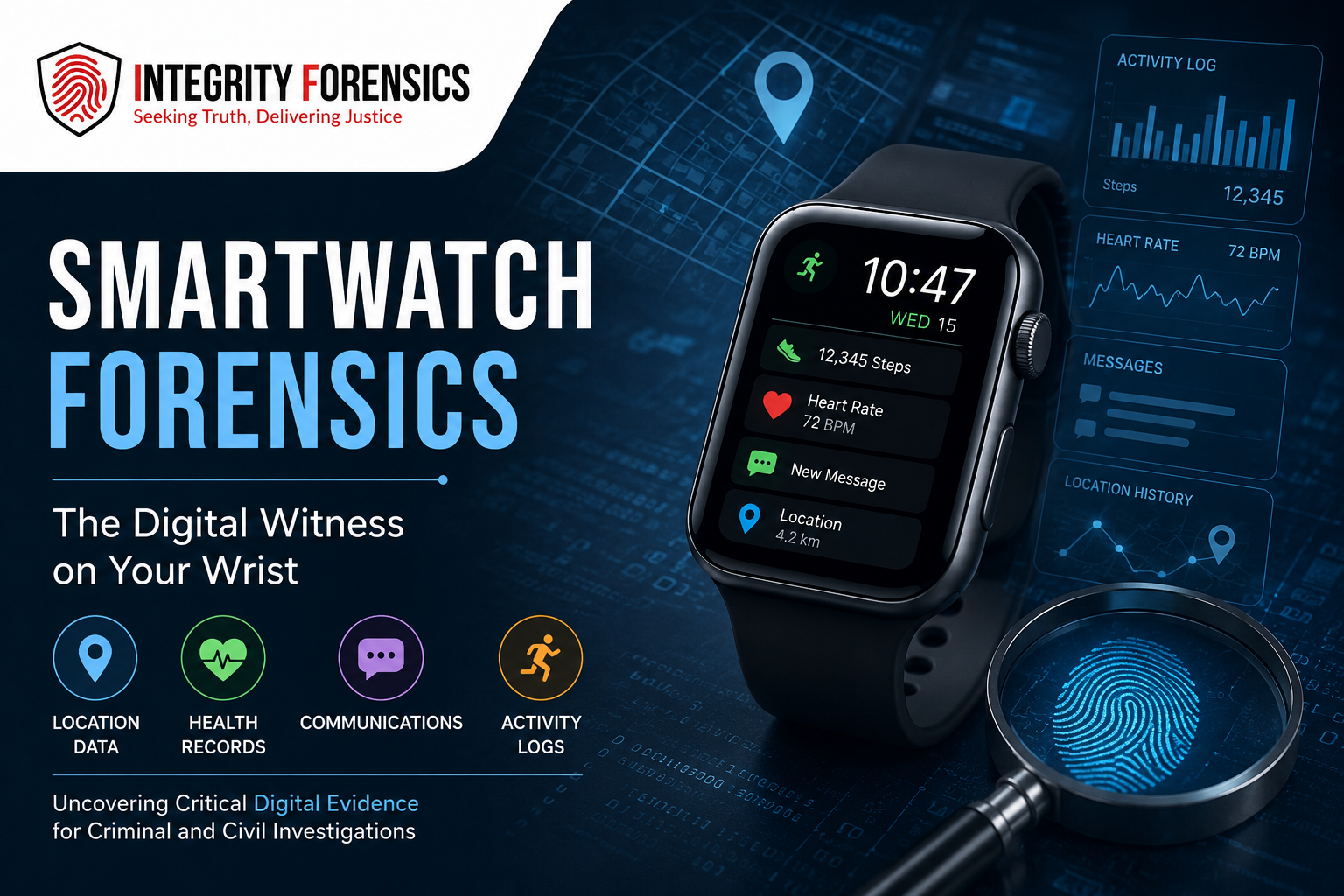
Smartwatch Forensics: The Digital Witness on Your Wrist
Introduction
Smartwatches have become an integral part of modern life. These wearable devices do much more than display notifications or track fitness goals. They continuously collect and store valuable information about a user’s activities, movements, communications, and health metrics.
As wearable technology becomes increasingly popular, smartwatches are emerging as important sources of digital evidence in forensic investigations. Much like smartphones, these devices can provide investigators with critical insights that help establish timelines, verify statements, and uncover hidden details relevant to a case.
This growing field, known as smartwatch forensics, is transforming how digital evidence is collected and analyzed in both criminal and civil investigations.
What Is Smartwatch Forensics?
Smartwatch forensics is a specialized branch of digital forensics that focuses on extracting, preserving, analyzing, and interpreting data stored on wearable devices such as smartwatches and fitness trackers.
These devices continuously generate digital records that may reveal:
- Location history
- Physical activity data
- Heart rate information
- Sleep patterns
- Messages and notifications
- Call logs
- Calendar events
- App usage records
- Bluetooth and Wi-Fi connections
When properly examined, this information can provide investigators with valuable evidence that supports or challenges claims made during an investigation.
Why Smartwatches Are Valuable Sources of Evidence
Unlike many traditional devices, smartwatches accompany users almost everywhere. Because they are worn on the body, they can provide a highly detailed record of a person’s activities throughout the day.
This continuous data collection can help investigators answer important questions such as:
- Where was an individual at a specific time?
- Was a person physically active during a reported incident?
- Did the individual receive calls or messages before or after an event?
- Can the recorded health data support or contradict witness statements?
The answers to these questions often play a significant role in reconstructing events and establishing factual timelines.
Types of Evidence Found on Smartwatches
1. Location Data
Many smartwatches utilize GPS technology to track movement and fitness activities.
Location records can help investigators:
- Verify travel routes
- Confirm an individual’s presence at a location
- Establish movement patterns
- Corroborate witness accounts
In some cases, GPS data has been used to challenge false alibis and strengthen investigative findings.
2. Health and Activity Data
Smartwatches continuously monitor physical activity and health metrics.
Useful records may include:
- Step counts
- Heart rate measurements
- Exercise sessions
- Sleep tracking data
- Stress monitoring information
Sudden changes in heart rate or activity levels can provide valuable clues regarding significant events or incidents.
3. Communication Records
Many wearable devices synchronize with smartphones and allow users to receive and respond to communications.
Forensic experts may recover:
- Text message notifications
- Email alerts
- Call logs
- Messaging app activity
- Contact information
These records can help establish communication timelines and identify interactions between individuals.
4. Application Data
Modern smartwatches support a wide range of applications.
Depending on the device, investigators may uncover:
- Navigation records
- Fitness app data
- Payment transactions
- Reminder notifications
- Social media interactions
Such information can provide additional context about a user’s activities and behavior.
Challenges in Smartwatch Forensic Analysis
While smartwatches offer valuable evidence, forensic examination presents several challenges.
Limited Storage
Wearable devices often have smaller storage capacities than smartphones. As a result, older data may be automatically overwritten.
Device Synchronization
Much of the information stored on a smartwatch is synchronized with smartphones or cloud services. Investigators frequently need to examine multiple devices to obtain a complete picture.
Encryption and Security Features
Modern wearable devices incorporate strong security measures designed to protect user data. Accessing and preserving information while maintaining forensic integrity requires specialized tools and expertise.
Rapid Technological Evolution
New smartwatch models and operating systems are constantly being introduced, requiring forensic professionals to stay updated with evolving technologies and extraction techniques.
The Importance of Proper Evidence Handling
As with all digital evidence, maintaining a proper chain of custody is essential when examining smartwatch data.
Forensic experts must ensure that:
- Data is preserved without alteration
- Evidence collection follows accepted forensic procedures
- Detailed documentation is maintained
- Analysis is conducted using validated forensic methods
These practices help ensure that the evidence remains reliable and legally admissible when presented in court or during dispute resolution proceedings.
Real-World Applications of Smartwatch Forensics
Smartwatch forensic analysis can be valuable in a wide range of investigations, including:
- Criminal investigations
- Insurance fraud cases
- Missing person investigations
- Workplace incidents
- Civil disputes
- Personal injury claims
- Digital evidence verification
The information stored on wearable devices often serves as an independent source of evidence that can strengthen investigative findings.
Conclusion
Smartwatches have evolved into powerful digital companions that record a significant portion of our daily lives. From location history and health metrics to communication records and activity logs, these devices generate valuable data that can play a crucial role in modern investigations.
As wearable technology continues to advance, smartwatch forensics is becoming an increasingly important component of digital forensic investigations. By carefully collecting and analyzing wearable device evidence, forensic experts can uncover critical information, establish accurate timelines, and help reveal the truth behind complex cases.
In today’s digital world, your smartwatch may be more than just a fitness tracker—it may be a silent witness holding the key to vital evidence.

