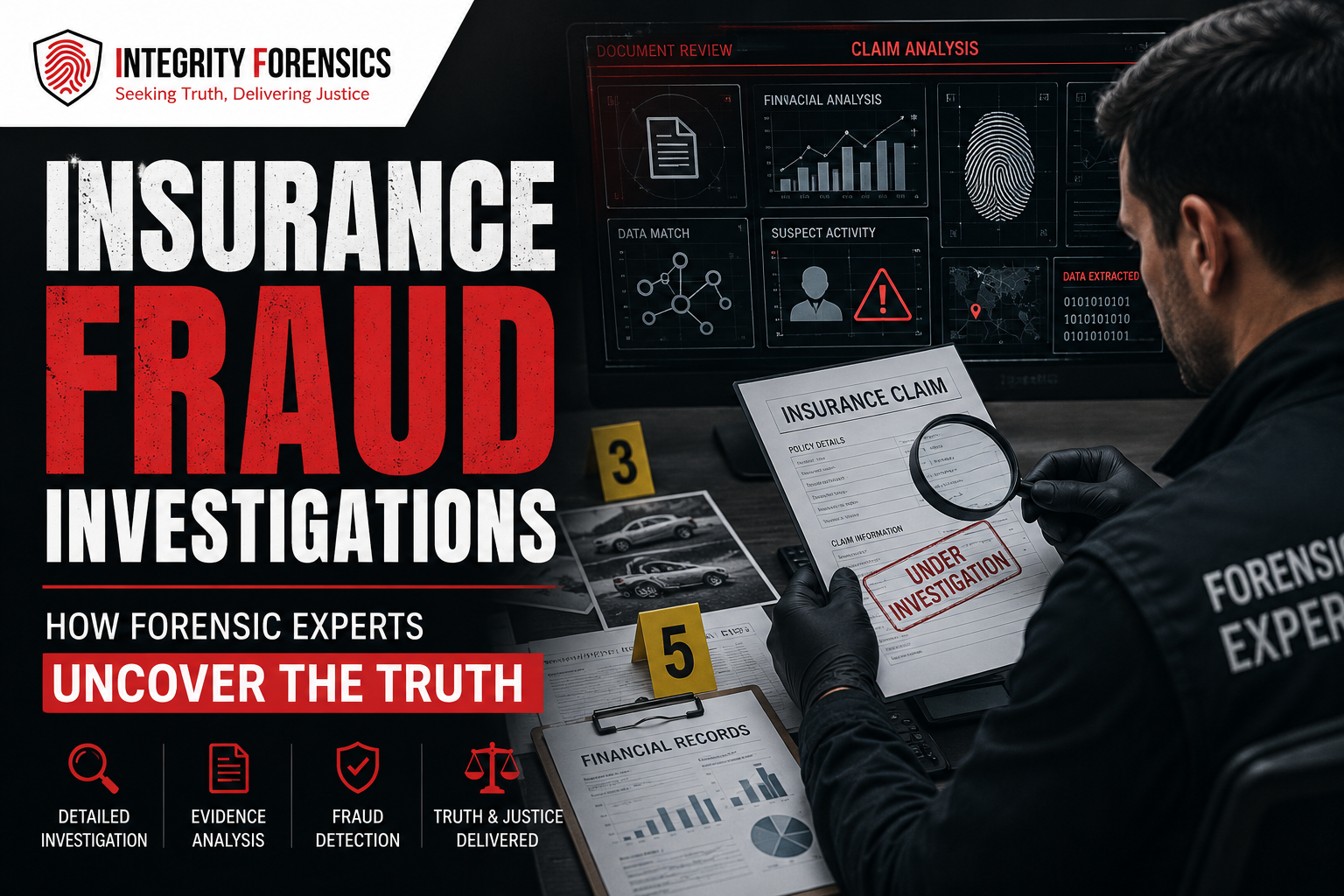
Insurance Fraud Investigations: How Forensic Experts Uncover the Truth
Introduction
Insurance exists to provide financial protection during unexpected events. Whether it involves a vehicle accident, property damage, medical emergency, or business loss, policyholders rely on insurance coverage when they need support most. Unfortunately, not all claims are genuine. Every year, insurance companies face significant losses due to fraudulent claims, making insurance fraud a growing concern worldwide.
Insurance fraud investigations play a critical role in identifying false claims, protecting honest policyholders, and maintaining the integrity of the insurance system. Through scientific analysis, evidence examination, and investigative expertise, forensic professionals help uncover the truth behind suspicious claims.
What Is Insurance Fraud?
Insurance fraud occurs when an individual or organization intentionally provides false, misleading, or exaggerated information to obtain financial benefits from an insurance policy.
Common examples include:
- Staged vehicle accidents
- Inflated repair or medical expenses
- False theft reports
- Deliberately damaged property
- Exaggerated injury claims
- Fake business loss claims
While some fraudulent activities may appear minor, they collectively cost insurers billions each year and often lead to higher premiums for legitimate customers.
Why Are Insurance Fraud Investigations Important?
Fraudulent claims affect more than insurance companies. They impact policyholders, businesses, and the broader economy.
Effective insurance fraud investigations help:
- Prevent financial losses
- Protect honest policyholders
- Maintain trust in insurance systems
- Support legal and regulatory compliance
- Identify organized fraud networks
- Provide evidence for legal proceedings
By uncovering fraudulent activities, investigators contribute to a fairer and more reliable insurance industry.
How Do Forensic Experts Investigate Insurance Fraud?
Insurance fraud investigations involve a systematic examination of evidence to determine whether a claim is legitimate.
Document Examination
Investigators review claim forms, invoices, receipts, medical reports, repair estimates, and other supporting documents for inconsistencies or signs of manipulation.
Evidence Verification
Physical and digital evidence is compared against the claimant’s statements to identify discrepancies.
Timeline Reconstruction
Forensic experts establish detailed timelines to determine whether events occurred as reported.
Digital Forensic Analysis
Emails, messages, photographs, GPS records, social media activity, and electronic documents may reveal information that contradicts a claimant’s account.
Financial Investigation
Bank records, transaction histories, and financial documents are examined to identify suspicious patterns or potential motives.
Common Red Flags in Fraudulent Claims
Certain indicators may suggest that further investigation is necessary.
Inconsistent Statements
Conflicting accounts from claimants, witnesses, or supporting documentation can indicate potential fraud.
Unusual Claim Timing
Claims submitted shortly after policy activation may require closer scrutiny.
Lack of Supporting Evidence
Missing records, receipts, photographs, or witness information may raise concerns.
Exaggerated Damages
Claims that significantly exceed the actual loss often warrant further investigation.
Suspicious Financial Activity
Unusual financial transactions may reveal motives behind fraudulent claims.
While these indicators do not automatically prove fraud, they often serve as starting points for forensic examination.
The Role of Digital Evidence
Modern insurance fraud investigations increasingly rely on digital evidence.
Forensic experts may analyze:
- Mobile phone records
- Social media activity
- Surveillance footage
- GPS location data
- Emails and communications
- Metadata from digital photographs
Digital evidence can help verify where an individual was located, when an event occurred, and whether statements made during a claim are accurate.
Challenges in Insurance Fraud Investigations
Investigating fraud is often complex and requires careful analysis.
Some common challenges include:
Sophisticated Fraud Schemes
Fraudsters may use forged documents, fabricated evidence, or coordinated activities to support false claims.
Digital Manipulation
Advancements in photo editing and artificial intelligence have made it easier to create misleading evidence.
Large Volumes of Data
Modern investigations often involve reviewing extensive digital and financial records.
Legal and Privacy Considerations
Investigators must follow strict legal procedures while collecting and preserving evidence.
Despite these challenges, forensic methodologies help ensure that findings remain objective, accurate, and legally defensible.
How Forensic Investigations Support Insurers
Forensic investigations provide insurance companies with reliable information for decision-making.
Benefits include:
- Accurate claim assessment
- Reduced fraud-related losses
- Improved risk management
- Stronger legal support
- Enhanced fraud prevention strategies
- Increased confidence in claim outcomes
These investigations help insurers distinguish legitimate claims from fraudulent ones while ensuring fair treatment for policyholders.
Why Insurance Fraud Detection Matters
Insurance fraud is not a victimless crime. Fraudulent claims increase costs for insurers, businesses, and consumers alike. Every false claim contributes to financial losses that ultimately affect honest policyholders through increased premiums and reduced resources.
By identifying fraudulent activities and uncovering hidden evidence, forensic experts help protect both insurers and legitimate claimants. Their work supports transparency, accountability, and trust throughout the claims process.
Conclusion
Insurance fraud investigations are essential for maintaining the integrity of the insurance industry. Through careful examination of documents, digital evidence, financial records, and claimant statements, forensic experts uncover the facts behind suspicious claims.
As fraud schemes become increasingly sophisticated, the role of forensic investigations continues to grow. By combining investigative expertise with scientific analysis, forensic professionals help insurers detect fraud, reduce losses, and make informed decisions based on credible evidence.
At Integrity Forensics, our experts utilize advanced forensic techniques and evidence-based methodologies to investigate suspicious claims, uncover fraudulent activities, and support organizations in their pursuit of truth, accountability, and justice.

